Category: Animated / Family

For kids… and adults who cry during Pixar movies.

  • Ironheart

    Ironheart

    Teen genius builds flying death suit between midterms. Also, there’s a demon.

    Look, Riri Williams is a 19-year-old engineering prodigy from Chicago who builds an Iron Man suit out of spare parts and emotional trauma, and Marvel said, “Yes, let’s add magic to that.” Enter The Hood, a villain who appears to have raided both a thrift store and a cursed monastery.

    Riri’s suit is powered by cutting-edge tech and grief, which in the MCU is basically standard operating procedure. Her AI assistant is her dead best friend. Her enemies are mystical gangsters. Her guidance counselor is probably a S.H.I.E.L.D. plant. And somewhere in the background, Mephisto is maybe lurking again like a raccoon in the MCU’s garbage can.

    Dominique Thorne is apparently incredible as Riri, delivering heartfelt speeches while flying at Mach 3 and dodging flaming curse bullets. Anthony Ramos plays The Hood, a villain who looks like he’s about to either hex you or drop a mixtape. He’s got a cloak, a chip on his shoulder, and access to the dark arts, which is a bold resume for a guy named Parker.

    There’s also some dude in a bunker with missiles, but no one remembers him because hello, magic hoodie.

    The show reportedly juggles a gritty Chicago vibe, heartfelt coming-of-age moments, and Marvel’s usual CGI wizard fights where everything explodes in slow motion while someone whispers “I believe in you.”

    Thematically, Ironheart is about legacy, loss, and whether you can out-tech the literal devil. Plot-wise, it’s been described as Iron Man Jr. with a side of Doctor Strange and the Electric Kool-Aid Tech War.

    Critics say it’s uneven but charming. Reddit says “mid.” Marvel says “trust the process.” I say it’s a heartfelt rollercoaster with a rocket-powered science nerd and a villain who owns both a glock and a grimoire.

    3.5 out of 5 repulsor blasts and one enchanted Timberland boot.

  • Elio

    Elio

    A Kid, Some Aliens, and Pixar’s Ongoing Mission to Emotionally Break Parents

    Elio is Pixar’s latest entry in their “What If Feelings Had Feelings?” cinematic universe. This time, instead of toys or emotions or the concept of death, they’ve decided to traumatize us through the lens of intergalactic diplomacy. Because nothing says “family entertainment” like a shy middle schooler accidentally becoming Earth’s ambassador to a council of extremely judgmental aliens.

    I haven’t seen it. But I’ve watched the trailer, read the early buzz, and sat through several YouTube reaction videos featuring grown adults tearing up at a teaser involving an alien blob hugging a child. So yes, I’m fully emotionally compromised.

    The plot follows Elio, a socially awkward 11-year-old who somehow gets beamed up into space after answering the phone wrong, and is immediately informed that he represents all of humanity. Naturally, the fate of the species now rests on the diplomatic skills of someone who still mispronounces “quesadilla.”

    The alien council looks like something out of a Lisa Frank fever dream: glowing jellyfish overlords, sentient geometric shapes, and one creature that appears to be a living mood ring. Meanwhile, back on Earth, Elio’s mom—who works for a secret government agency—probably reacts like any parent would: equal parts panic, denial, and trying to find a Wi-Fi signal strong enough to yell at NASA.

    Critics are already calling it “visually stunning” and “deeply heartfelt,” which is Pixar code for “You will cry, and you won’t know why.” The real plot twist isn’t whether Elio saves humanity, it’s how many parents will sob uncontrollably at the inevitable emotional monologue about being misunderstood, belonging, and loving your weird kid for who they are.

    Also, based on Pixar tradition, there’s probably a heartbreaking scene involving a stuffed animal, a flashback, and at least one emotionally devastating music cue designed to haunt you for days.

    Elio is about identity, family, and the crushing weight of representing Earth while still being grounded if your grades drop. It’s funny. It’s colorful. And it’s one more reminder that Pixar is fully committed to emotionally ruining everyone under the guise of animated wonder.

    I give it 4 out of 5 galactic therapy sessions, and I assume at least one alien learns what a juice box is and questions whether humans should be allowed to exist.

  • How to Train Your Dragon (Live-Action)

    How to Train Your Dragon (Live-Action)

    It’s Like the Animated One, But With Real Humans and a Dragon You Can Almost Pet (If You’re Brave)

    DreamWorks has decided it’s time to remake one of the most beloved animated films of all time—because apparently we live in a timeline where every great movie eventually becomes a live-action reboot with more lens flare and emotionally intense teenage side-eyes. Enter the live-action How to Train Your Dragon.

    Mason Thames plays Hiccup, the misunderstood Viking teen with a haircut that says “I journal.” Nico Parker is Astrid, the no-nonsense warrior girl who somehow looks terrifying even while holding a flower. And Gerard Butler returns as Stoick the Vast, because he’s legally required to yell with a Scottish accent in any movie involving swords or fatherhood.

    The dragon, Toothless, is now rendered in full ultra-HD realism, which means you’ll probably feel deeply bonded to him by the end of the movie—or at least mildly betrayed when he doesn’t exist in real life. He’s still got the big expressive eyes, the catlike reflexes, and the ability to make grown adults cry with one blink.

    I haven’t seen the movie, but I have watched the trailer 37 times, read every headline, and accidentally joined a Facebook group called “Toothless Truthers.” So I’m qualified. Internet discourse is torn: some people say “It’s beautiful and nostalgic,” while others are furious that the dragons don’t look like the animated versions, even though they still breathe fire, which feels like the bigger deal.

    Also, there was minor controversy about Astrid’s casting, because no one can simply enjoy anything anymore without arguing about it in 240-character increments. Still, reviews are already calling it “visually stunning” and “a faithful reimagining,” which is critic code for “Please don’t yell at us on Twitter.”

    There’s probably a heartfelt montage where Hiccup learns to trust himself by flying directly into danger. There’s probably a scene where Stoick screams, “He’s not ready!” while a village burns in the background. And there’s absolutely a moment where Toothless does that little head tilt and every audience member immediately forgives the entire Hollywood remake machine.

    In conclusion, How to Train Your Dragon (live-action) is soaring back into theaters to make you cry, cheer, and maybe Google “How much does it cost to adopt a CGI dragon?”

    I give it 4 out of 5 dramatic flight sequences, with bonus points for every time someone learns an important life lesson mid-air.

  • Karate Kid: Legends

    Karate Kid: Legends

    Two Legends. One Kid. And More Wisdom Than a Panda Express Fortune Cookie

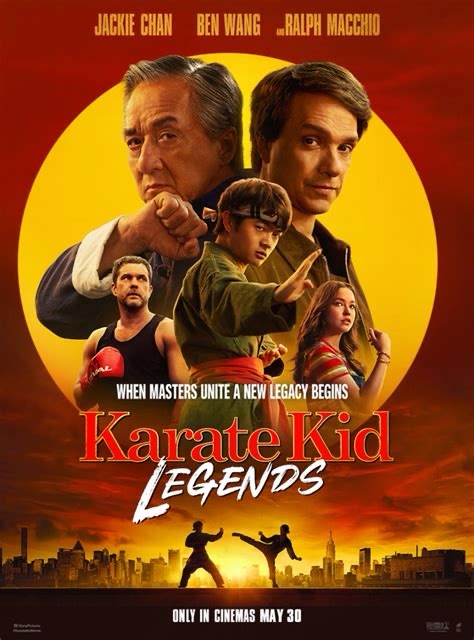
    So apparently this is the movie where Jackie Chan and Ralph Macchio team up—not to stop a global threat, but to co-manage the emotional stability of one incredibly stressed-out teenager. It’s a Karate Kid crossover event, and by “event,” I mean you’ll leave the theater unsure whether you need a black belt or a therapist.

    The story revolves around a young martial arts prodigy named Li Fong, who moves from Beijing to New York because the universe decided his life wasn’t hard enough already. He’s then jointly trained by two men from completely different cinematic timelines who bond over a mutual love of punching things and looking disappointed while holding tea.

    Jackie Chan, at 71 years old, is still flipping over balconies like gravity owes him money. His Mr. Han character brings wisdom, pain, and at least one scene where he teaches a lesson by mopping a floor so aggressively it causes a flashback. Meanwhile, Ralph Macchio’s Daniel LaRusso is still carrying the emotional weight of a high school tournament from 1984. He now mentors kids through karate and metaphorical breakdowns in parking lots.

    The plot builds toward a massive martial arts tournament, because that’s how this universe solves all its problems. International tension? Tournament. Grief and identity crises? Tournament. Forgot your locker combo? Spin kick until someone cries.

    Expect a lot of deep moral lessons delivered between flying kicks and dramatic stares. Jackie teaches “stillness in motion.” Ralph teaches “motion while overthinking everything.” Together, they’re like a divorced couple trying to co-parent a spiritual awakening.

    There’s also a rich villain dojo, because there’s always a rich villain dojo. They have matching uniforms, emotionally unavailable parents, and a team motto that probably involves the word “dominate” in calligraphy.

    I give it 4 out of 5 slowly whispered sayings that could double as yoga class instructions. Bonus points if Jackie and Ralph do a synchronized bow while the teen does a spinning backflip into inner peace.

  • Lilo & Stitch

    Lilo & Stitch

    Lilo & Stitch (2025): Ohana Means Budget Cuts

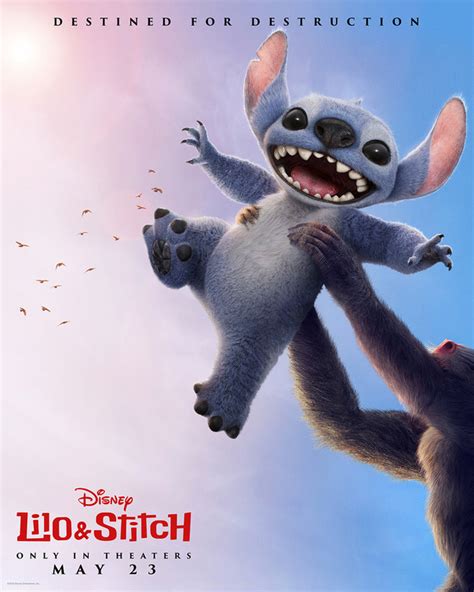
    Disney’s latest live-action remake, Lilo & Stitch, boldly reimagines the beloved 2002 animated classic by asking the question: “What if we took everything quirky and heartfelt about the original and filtered it through a committee of executives armed with CGI and nostalgia?”

    In this version, Lilo is still a lonely Hawaiian girl, and Stitch is still a genetically engineered alien fugitive. But now, their heartwarming tale unfolds amidst hyper-realistic backdrops and characters that straddle the uncanny valley. The film attempts to capture the original’s charm while introducing deeper emotional layers, particularly in the relationship between sisters Lilo and Nani .

    One notable change is the portrayal of the alien characters Jumba and Pleakley. Instead of their original alien forms with humorous disguises, the characters don more realistic “human skin suits” for part of the film to better suit the live-action medium and manage production budgets . This creative decision has sparked discussions among fans, especially regarding Pleakley’s character, who was cherished for his quirky humor and progressive representation in the original film .

    Despite these changes, the film has generated significant buzz. The trailer amassed over 100 million views, and the Super Bowl spot featuring Stitch “crashing” the field received 173.1 million online views in 24 hours, making it Disney’s most viewed spot digitally .

    I haven’t seen it, but based on the trailers and the online discourse, it seems like Disney has once again managed to stir both excitement and controversy with its latest remake.

    Rating: 3 out of 5 intergalactic adoption papers

  • Snow White (2025)

    Snow White (2025)

    Mirror, Mirror on the Wall—Why Is This Movie Two Hours Long?

    Disney is back at it again, remaking a beloved classic because apparently the vault needs more Wi-Fi. Snow White (2025) is a bold, modern reimagining of the original 1937 film, in the same way that using kale instead of bread is a bold, modern reimagining of a sandwich.

    This version stars a very earnest Snow White who, despite being named after frozen precipitation, is somehow still a symbol of inner fire, personal growth, and possibly corporate brand alignment. The trailer makes it clear that she no longer just “cleans stuff and talks to animals,” which was the original résumé. Now she’s here to lead a kingdom, break glass ceilings, and possibly drop a three-part empowerment album featuring Lin-Manuel Miranda.

    Let’s talk about the Evil Queen, who once again is the kind of stepmother who would absolutely write passive-aggressive Facebook posts in cursive font. She wants to be “the fairest of them all,” even though it’s 2025 and we all know that beauty is a social construct monitored by an algorithm.

    Also: the magic mirror now talks like a sentient iPad and probably has a Disney+ subscription.

    The dwarfs—sorry, “mystical forest companions” or whatever legal term they’re using—have been reimagined too. They no longer mine gems (bad for the environment), but instead run a gluten-free bakery and a trauma-informed axe-throwing retreat. One of them is named Kyle now. You just know it.

    Expect the usual: musical numbers where everyone sings in perfect harmony while carrying buckets of water, animals that somehow know choreography, and a third-act twist where true love is redefined as “learning to love yourself (with backup vocals).”

    The prince? He’s still here, but mostly just to look confused and support her Etsy business. And the apple? Probably organic and ethically sourced from Whole Foods with a poison gluten-free sticker on it.

    In conclusion, this isn’t your grandmother’s Snow White. It’s not even your older cousin’s Snow White. It’s a cinematic TED Talk on empowerment, forest co-habitation, and the dangers of reflective surfaces.

    I give it 3 out of 5 talking woodland creatures, with a bonus point if someone actually eats the apple without doing a whole monologue about self-acceptance first.

  • A Minecraft Movie

    A Minecraft Movie

    In A Minecraft Movie, we follow Steve—a blocky, silent protagonist—as he awakens in an unfamiliar world filled with mystery, monsters, and an unreasonable number of chickens.

    What begins as a simple quest for survival quickly becomes something deeper: a search for meaning in a universe made entirely of squares. Along the way, Steve must battle inner demons (and literal ones), build shelter from emotional storms, and try to understand why a Creeper blew up his only friend.

    The film’s final act takes a bold turn into philosophical territory, asking questions like: What defines a hero? What is the Nether, metaphorically? Can a pig be a soulmate?

    Controversially, the movie sparked chaos in theaters worldwide when a running joke about chickens caused swarms of kids to cluck loudly, throw popcorn, and demand a sequel during the credits. Authorities described it as “mild anarchy with enthusiastic poultry energy.”

    Critics are calling it “the most existential sandbox experience since Cast Away,” and honestly, they might be right. Probably.