Category: Drama

Feelings. Lots of them. Possibly some crying.

  • The Long Walk: America’s Next Top Trauma

    The Long Walk: America’s Next Top Trauma

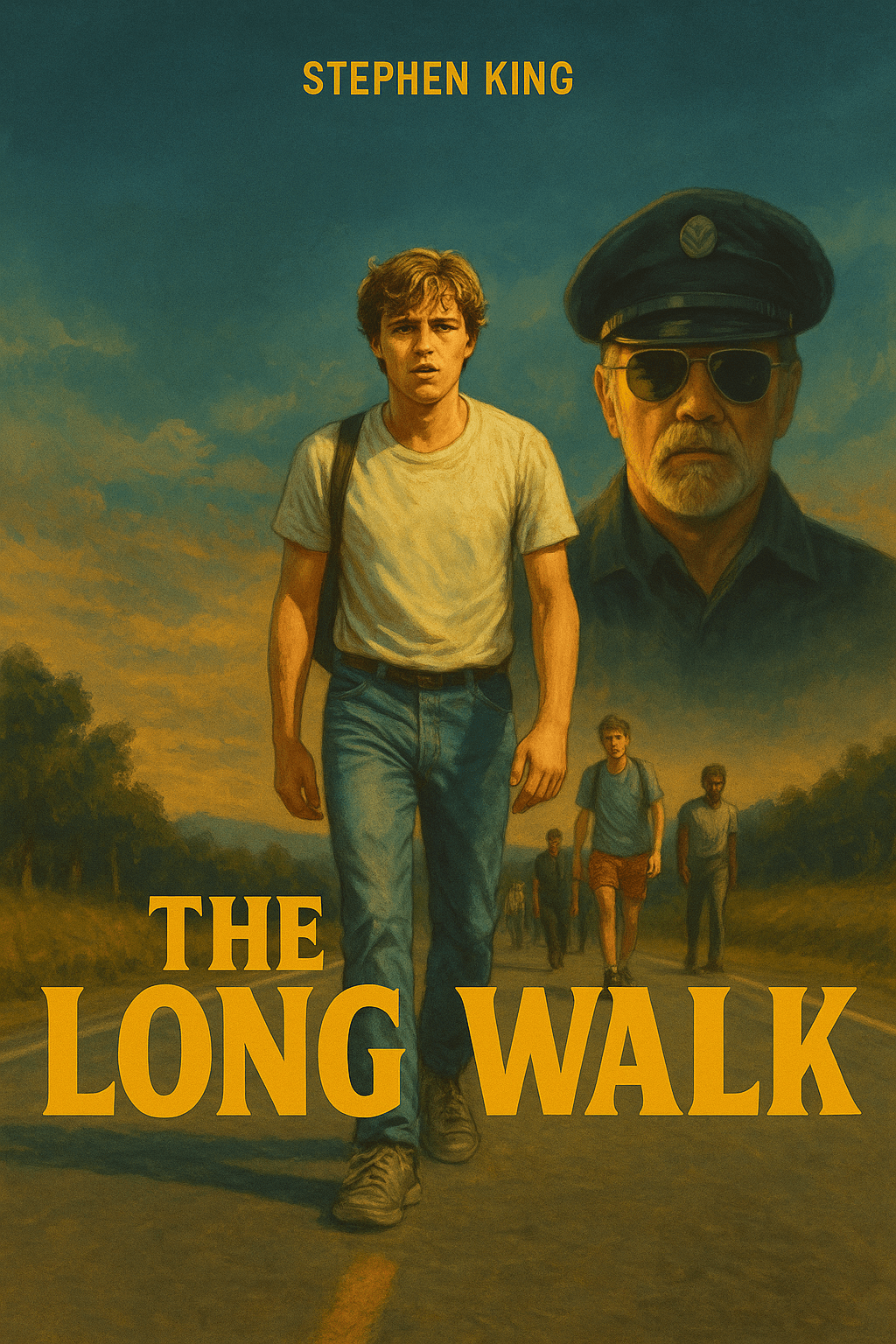
    Stephen King’s The Long Walk asks one simple question: what if middle school gym class ended in state-sanctioned execution?

    In a future where the government solves boredom by making teenage boys walk until they literally drop dead, 100 kids are forced into a cross-country death march with exactly zero snack breaks. Walk too slow, get three warnings, and—boom—you’re deleted like last season’s streaming content.

    Cooper Hoffman plays Ray Garraty, a sad-eyed boy with just enough backstory to make his inevitable demise feel poetic. He’s joined by Peter McVries (hot, haunted), Stebbins (probably a clone), and Barkovitch (definitely not okay). Meanwhile, Mark Hamill shows up as The Major, a military daddy figure who hands out trauma like participation trophies.

    It’s bleak. It’s brutal. It’s allegedly a metaphor. And according to early buzz, the movie changes the book’s ending—which has already triggered at least five Reddit meltdowns and one guy threatening to walk in protest.

    4.5 out of 5 government-issued step counters.

    Come for the existential dread. Stay because you physically can’t stop.

  • Americana

    Americana

    From what I can gather, Americana is about a magic shirt. Not Harry Potter magic—more like “if your uncle’s old rodeo jacket had ghosts and bad intentions.” This so-called “ghost shirt” gets stolen, and suddenly a dusty small town is knee-deep in crime, blood, and country music dreams.

    Sydney Sweeney plays Penny Jo, a waitress with a stutter and big aspirations. She’s apparently the emotional anchor of the whole thing, which is ironic because just a few months ago the internet was roasting her denim ad for looking like a campaign commercial filmed in a Bass Pro parking lot. Compared to that fiasco, Americana at least gives her something resembling dignity, even if she’s propping up a movie that critics say zigzags between Tarantino shootouts and Hallmark small-town drama.

    The supporting cast looks like it was assembled from a very weird raffle: Paul Walter Hauser brooding, Simon Rex sleazing, Halsey wandering in because… sure, why not. Zahn McClarnon shows up and, as usual, everyone agrees he deserved more screen time than the script itself. And then there’s a kid convinced he’s Sitting Bull reincarnated, which sounds less like a plot device and more like something you’d overhear at a county fair.

    Critics keep calling it “ambitious,” which is Hollywood code for “we’re still trying to figure out what the hell we just watched.” The San Francisco Chronicle said it’s like a toddler with a blender, which feels accurate. The box office didn’t love it, but hey, maybe it’ll find a second life on streaming, confusing people who thought they were clicking on Yellowstone.

    Rating: Two haunted shirts out of five.

  • The Unholy Trinity

    The Unholy Trinity

    Shootouts, Gold, and Samuel L. Jackson Doing Something Weird in a Saloon

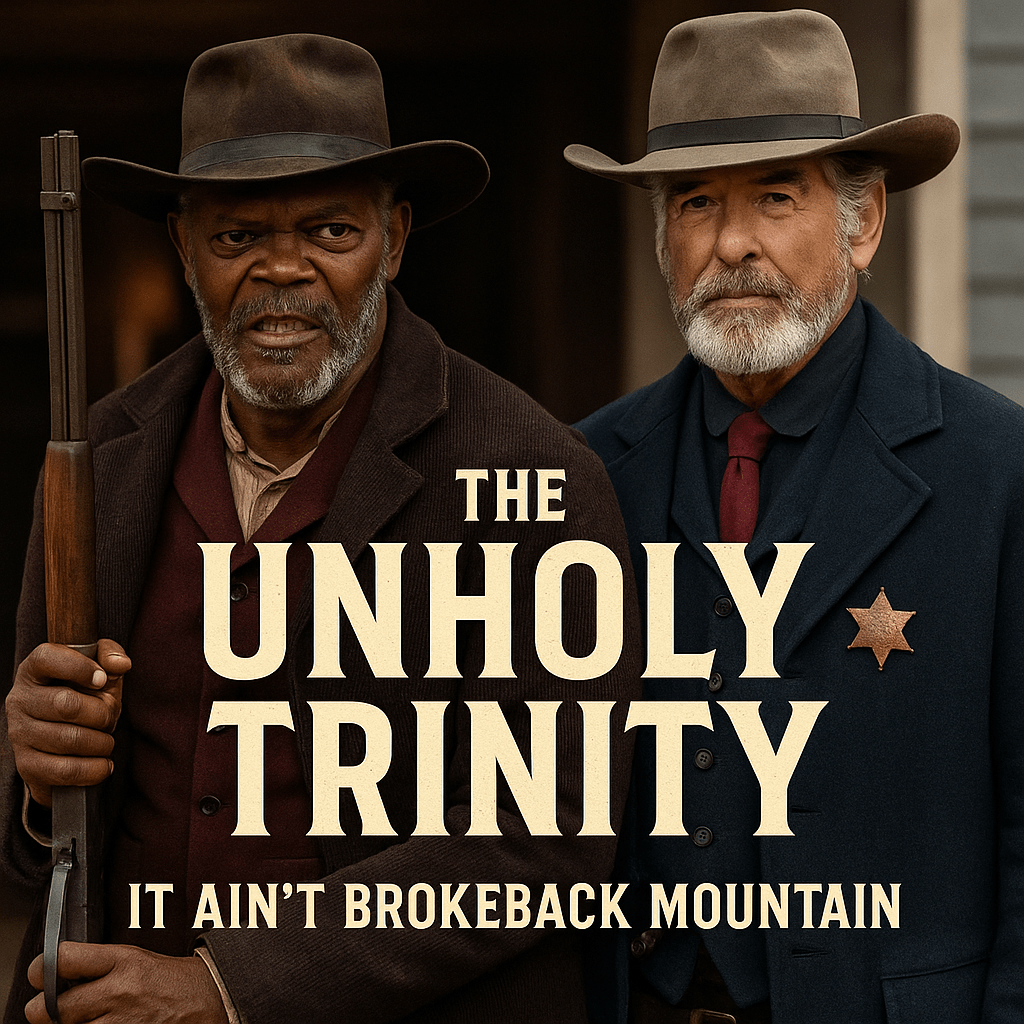
    The Unholy Trinity is a modern western where jealousy, buried gold, and the film rights to every shoot-’em-up cliché collide in dusty Montana. Pierce Brosnan plays Gabriel Dove, a sheriff with decent facial hair and unresolved Civil War flashbacks. Samuel L. Jackson shows up as St. Christopher, a charismatic outlaw who may or may not be improvising half his lines just to keep things interesting. And Brandon Lessard plays Henry Broadway, a young man on a revenge mission who looks like he’s never actually ridden a horse but definitely owns at least one bolo tie.

    I haven’t seen it. But I’ve watched the trailer, skimmed critic reviews, and accidentally wandered into an online debate about whether it’s “a tribute to classic westerns” or “two hours of dusty people yelling at each other while sitting weirdly still.”

    The plot revolves around some very 1800s things: revenge, betrayal, injustice, and buried Confederate gold — which, like most Confederate ideas, probably wasn’t that valuable to begin with. There’s also a wrongly accused woman, a lot of hats, and what I can only assume is a dramatic standoff in front of a church or possibly a general store that sells bullets by the scoop.

    Critics say Jackson and Brosnan “keep the film afloat,” which is film critic code for “the plot wandered off but we like the actors.” The Washington Post called it a “low-budget, underwhelming B-movie,” which still sounds better than most meetings I’ve had this year.

    And yes—this dropped right as Brokeback Mountain hit its 20th anniversary, which means some people were probably hoping for another complex, layered, emotionally gut-wrenching western. The Unholy Trinity is… not that. It’s more of a shoot-first, emotionally-process-later kind of situation. Less longing glances and more “pass the dynamite.”

    But hey, not every western needs to make you cry in a tent. Some are just here to give Samuel L. Jackson a rifle and let him monologue about justice while chewing beef jerky.

    I give The Unholy Trinity 3 out of 5 dusty stares, and I assume someone gets shot mid-sentence by a character named Wyatt, Colt, or “the banker.”

  • Eddington

    Eddington

    The Pandemic Western That Asked: What If TikTok Was Armed?

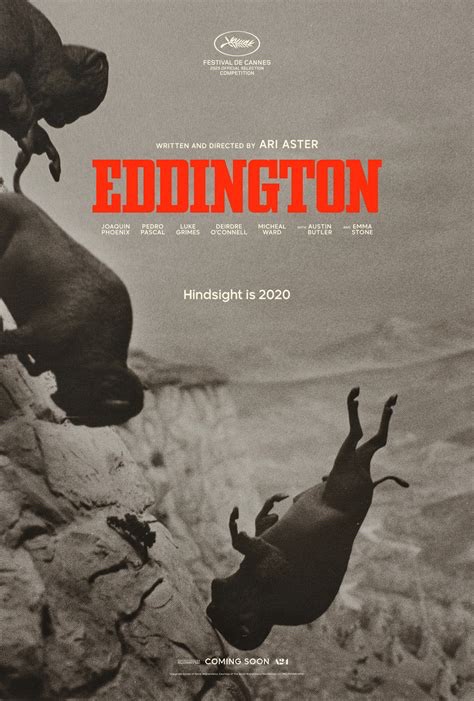
    Eddington is like bingeing a pandemic conspiracy forum while eating cowboy-shaped cookies dipped in existential dread. Ari Aster has somehow convinced Joaquin Phoenix to trade in his usual silent brooding for gun-barrel sermons about “reclaiming our sovereignty,” which is either about COVID or his neighbor stealing his recycling bin.

    Pedro Pascal struts through town hall like a man who once read the Constitution on a bar napkin and now won’t take off his bolo tie. Emma Stone plays a quietly unraveling dollmaker, which is either a metaphor or just the side hustle of every mom in 2020. And Austin Butler—bless him—plays a TikTok prophet named Vernon Jefferson Peak (which also sounds like a state park where teens go missing). He spends most of the movie livestreaming end-times poetry while standing on a pickup truck bed surrounded by chickens and despair.

    Set in May 2020, this “modern Western” includes everything we were too emotionally fragile to relive: mask feuds, civil unrest, political cosplay, body doubles, livestreamed showdowns, and the slow death of empathy, all shot in the gorgeous light of a world on fire. Critics are calling it a “masterpiece of anxiety” or “a film that made me want to live in a bunker made of Clorox wipes.” There are reportedly moments so intense audiences gasp, cry, or just quietly reevaluate their social media habits.

    I haven’t seen Eddington, but based on the trailers, the reviews, and the sweaty online discourse, I’m pretty sure it’s the only film where a cowboy debates virology while doomscrolling next to a burning Walgreens. And honestly? That’s cinema.4 out of 5 cultish influencers baking sourdough while explaining The Deep State via interpretive square dance.

  • Materialists

    Materialists

    Love, Luxury, and the Crushing Weight of Your Emotional Net Worth

    Materialists is a romantic comedy directed by Celine Song, which means it’s got feelings, longing, and at least one person crying in a beautifully lit room while staring at furniture they can’t afford. It stars Pedro Pascal, Dakota Johnson, and Chris Evans, which is basically Hollywood’s way of saying, “This is hot people therapy disguised as a film.”

    I haven’t seen it. But I have seen the trailer, read an article titled “Why Materialism Is the New Minimalism,” and scrolled through 13 comments debating whether Pedro Pascal’s character is emotionally available or just owns too many scarves. So I’m good.

    From what I can tell, the movie is about a woman (Dakota Johnson) who works as a matchmaker for the rich—like eHarmony, but if everyone’s love language is “owning a yacht.” She finds herself caught between two wildly different men: one a charming tech billionaire who probably sends voice memos instead of texts, the other a dreamy underdog with good hair and unresolved trauma.

    There are fancy apartments. There are slow-motion champagne toasts. There are wide shots of people walking across marble floors while violin music whispers, “This is meaningful.” At some point, someone definitely says, “Money can’t buy happiness,” while actively wearing a $14,000 watch.

    Pedro Pascal may or may not play a philosophical art dealer who drinks espresso and says things like, “We are all just curators of our own longing.” Chris Evans plays the other guy—probably a little broken, probably brooding, probably owns a motorcycle he doesn’t ride.

    Critics have called it “sharp and stylish,” which is code for “There’s kissing, but the kissing is sad.” Thematically, it seems to explore the idea that love and capitalism might not mix—especially when your idea of intimacy is sending someone an NFT of a bouquet.

    Materialists is about desire, status, connection, and the haunting emptiness of the mid-century modern lifestyle. It’s aspirational. It’s existential. It’s the only rom-com where you might Google “how to emotionally downsize.”

    I give it 4 out of 5 ethically sourced heartaches, and I assume at least one character breaks up with someone using a slideshow.

  • The Life of Chuck

    The Life of Chuck

    A Three-Act Existential Breakdown Featuring Tap Dancing, Ghosts, and Mortgage Payments

    This is a movie based on a story by Stephen King, which means it probably includes at least one of the following:

    A haunted object A child who sees things Someone slowly losing their mind in a Denny’s

    But this one’s… different. It’s called The Life of Chuck, and from what I haven’t seen, it’s about a guy named Chuck who either dies at the beginning, middle, or end—or possibly all three—and the movie decides to tell his story backwards, because why not mess with the audience’s emotional chronology and their sense of linear time?

    The film is divided into three acts, which are like puzzle pieces from three different boxes:

    Chuck’s quiet death in a hospital Chuck’s strange middle-aged career detour into interpretive dance and spiritual crises Chuck’s childhood, where he discovers his attic contains both his future and a raccoon named Greg who knows too much

    There’s also an apocalyptic subplot, but it’s unclear whether it’s happening to the world or just Chuck’s cholesterol. At some point, a billboard with Chuck’s face appears in the sky, possibly to remind people to floss or question the meaning of consciousness.

    Expect:

    A monologue about regret delivered during an earthquake A scene where someone tap dances while a star collapses Chuck standing alone in a grocery store, whispering “this feels off” A metaphor so heavy it breaks a floorboard

    This movie stars Tom Hiddleston, Mark Hamill, and possibly your own emotional baggage. It’s described as “heartwarming” by people who cried during a soft pretzel commercial once.

    I give it 4 out of 5 metaphorical billboards, with bonus points if Chuck actually turns out to be a cosmic database administrator with a passion for jazz and slow disintegration.

  • The Phoenician Scheme

    The Phoenician Scheme

    Espionage, Eccentricity, and a Monologue Delivered Entirely Through Eyebrow Raises

    The Phoenician Scheme is the latest Wes Anderson film, which means it’s already been declared both “a masterpiece of visual symmetry” and “a crime against traditional narrative structure” depending on which corner of the internet you frequent.

    I haven’t seen it. But I have seen the trailer, read three think pieces, and accidentally wandered into a Reddit thread titled “Was the lemon truly a metaphor?” So I’m basically an expert.

    The plot, if you can call it that, follows an international cabal of emotionally detached spies as they unravel a Cold War-era mystery involving forged art, coded telegrams, and possibly a secret weapon disguised as a tea set. Jason Schwartzman plays a disillusioned cipher analyst who hasn’t blinked since 1997. Tilda Swinton plays a former double agent turned winemaker. Willem Dafoe may or may not be playing a sentient weather balloon.

    There are trench coats. There are typewriters. There’s a recurring motif involving bees, time zones, and the haunting sound of a metronome. Half the dialogue is whispered in French and the other half is delivered while someone makes hard eye contact across a 12-foot mahogany desk.

    Critics say it’s a “lovingly arranged meditation on espionage and existential drift,” which is film critic for “I don’t know what just happened but I feel smarter now.” Audiences say it’s “visually stunning,” which is what people say when they don’t want to admit they didn’t understand the part with the upside-down violin solo.

    Somewhere around the 40-minute mark, there’s allegedly a scene where four spies silently communicate their mutual distrust through the choreography of folding pocket squares. This is followed by a slow zoom on a filing cabinet and a surprise cameo from Jeff Goldblum’s disembodied voice reading surveillance transcripts like bedtime poetry.

    The Phoenician Scheme is about betrayal, bureaucracy, and beige. It’s less a film and more a highly curated panic attack set to a harpsichord soundtrack.

    I give it 4 out of 5 cross-stitched dossiers, and I assume at least one character is a metaphor for colonial guilt wrapped in a lavender cravat.

  • Juliet & Romeo

    Juliet & Romeo

    Pop Ballads, Period Costumes, and the Most Emotionally Intense Key Change Since Les Mis

    Juliet & Romeo is what happens when Shakespeare meets Spotify. It’s a bold reimagining of the classic tragedy—except with pop music, elaborate choreography, and Rebel Wilson showing up just to make sure nobody forgets this is, in fact, a musical.

    This version flips the title and the ending. Yes, you read that right: they live. No tomb, no poison, no dagger, no tragic final gasp—just a sweeping duet and a vaguely empowering montage that seems to say, “Love wins. Death can suck it.”

    Juliet, played by Clara Rugaard, is all eyeliner, elegance, and emotional belting. Romeo, played by Jamie Ward, looks like a sentient candle commercial and sings every line like he’s one heartbreak away from joining a boy band. Together, they dance through Verona like it’s a Renaissance-themed TikTok set, exchanging Shakespearean side-eye in between verses of lyrics like “Why do they call it falling in love / When all it does is break you?”

    Critics are split. Some say it’s charming and bold. Others say it’s what happens when someone lets an AI rewrite West Side Story after binge-watching Glee. The songs are catchy in that “Was that real or did I dream it?” kind of way, and there’s a moment where Juliet delivers a soliloquy while standing on a balcony framed by a full gospel choir and a literal shooting star. Somewhere in the afterlife, Shakespeare is either weeping with joy or writing a sonnet titled Thou Hast Ruined Mine Plot Twist.

    The sets are lush, the costumes are stunning, and the emotional stakes are set to 11, even if the actual sword fighting looks like an aggressive dance-off at a Renaissance Fair. It’s loud. It’s sincere. It’s deeply allergic to subtlety.

    And while the original story was about the tragedy of fate and impulsive youth, this version is about self-empowerment, second chances, and holding a high note long enough to prove a point.

    I give Juliet & Romeo 4 out of 5 glitter-dusted declarations of love, with a bonus point for every critic who left the theater unsure whether they were moved, confused, or suddenly in love with the concept of mood lighting.

  • The Last Rodeo

    The Last Rodeo

    Dust, Drama, and One Emotionally Available Horse

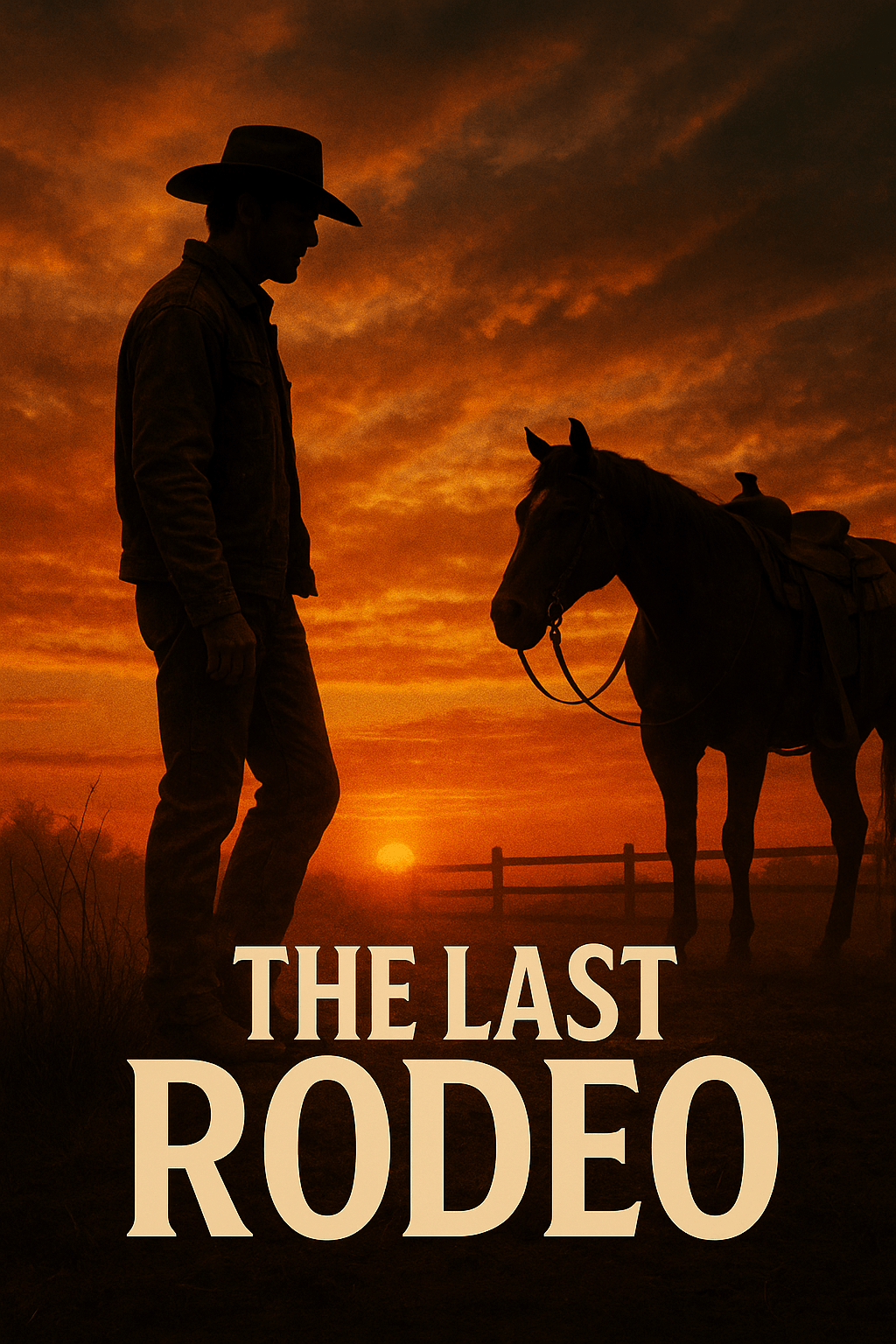
    The Last Rodeo is the kind of movie where you can smell the plot just by looking at the poster: one man, one saddle, and one final emotionally cathartic ride into the setting sun. It stars an aging cowboy (probably played by someone like Josh Brolin or any actor whose face looks like it was carved out of barn wood) who’s been out of the game since The Incident™ and now gets dragged back in for—you guessed it—one last rodeo.

    There’s a younger rider with potential but no discipline, a daughter he doesn’t talk to because of reasons, and a horse named something profound like “Redemption” or “Carol.” The trailer includes slow-motion dirt kicks, at least three scenes where someone dramatically tosses a cowboy hat onto a fence post, and a lot of gravel-voiced whisper-yelling like, “This ain’t just about bulls, son. It’s about who you are on the inside.”

    At some point, the protagonist will stare at an empty arena and flash back to a better time. This is followed by either a training montage set to acoustic guitar or a very quiet scene where he stares out over a prairie while being backlit by emotional trauma.

    There’s definitely a rival. His name is probably Cade. He drives a lifted truck, chews toothpicks aggressively, and wears designer denim. He once stole the protagonist’s title, his horse, and maybe his wife. It’s never made fully clear.

    The Last Rodeo is not just about bull riding. It’s about regret. It’s about second chances. It’s about saying “I’m sorry” without actually saying it, usually by building a barn with your estranged son. It’s about sweat-stained cowboy hats and a climactic ride that ends with either victory, a trip to the hospital, or both.

    In short, it’s The Wrestler but with more livestock.

    I give it 4 out of 5 metaphorical sunsets, with a bonus point for every time a character says “this ain’t no rodeo” while actively being at a rodeo.