• Materialists

    Materialists

    Love, Luxury, and the Crushing Weight of Your Emotional Net Worth

    Materialists is a romantic comedy directed by Celine Song, which means it’s got feelings, longing, and at least one person crying in a beautifully lit room while staring at furniture they can’t afford. It stars Pedro Pascal, Dakota Johnson, and Chris Evans, which is basically Hollywood’s way of saying, “This is hot people therapy disguised as a film.”

    I haven’t seen it. But I have seen the trailer, read an article titled “Why Materialism Is the New Minimalism,” and scrolled through 13 comments debating whether Pedro Pascal’s character is emotionally available or just owns too many scarves. So I’m good.

    From what I can tell, the movie is about a woman (Dakota Johnson) who works as a matchmaker for the rich—like eHarmony, but if everyone’s love language is “owning a yacht.” She finds herself caught between two wildly different men: one a charming tech billionaire who probably sends voice memos instead of texts, the other a dreamy underdog with good hair and unresolved trauma.

    There are fancy apartments. There are slow-motion champagne toasts. There are wide shots of people walking across marble floors while violin music whispers, “This is meaningful.” At some point, someone definitely says, “Money can’t buy happiness,” while actively wearing a $14,000 watch.

    Pedro Pascal may or may not play a philosophical art dealer who drinks espresso and says things like, “We are all just curators of our own longing.” Chris Evans plays the other guy—probably a little broken, probably brooding, probably owns a motorcycle he doesn’t ride.

    Critics have called it “sharp and stylish,” which is code for “There’s kissing, but the kissing is sad.” Thematically, it seems to explore the idea that love and capitalism might not mix—especially when your idea of intimacy is sending someone an NFT of a bouquet.

    Materialists is about desire, status, connection, and the haunting emptiness of the mid-century modern lifestyle. It’s aspirational. It’s existential. It’s the only rom-com where you might Google “how to emotionally downsize.”

    I give it 4 out of 5 ethically sourced heartaches, and I assume at least one character breaks up with someone using a slideshow.
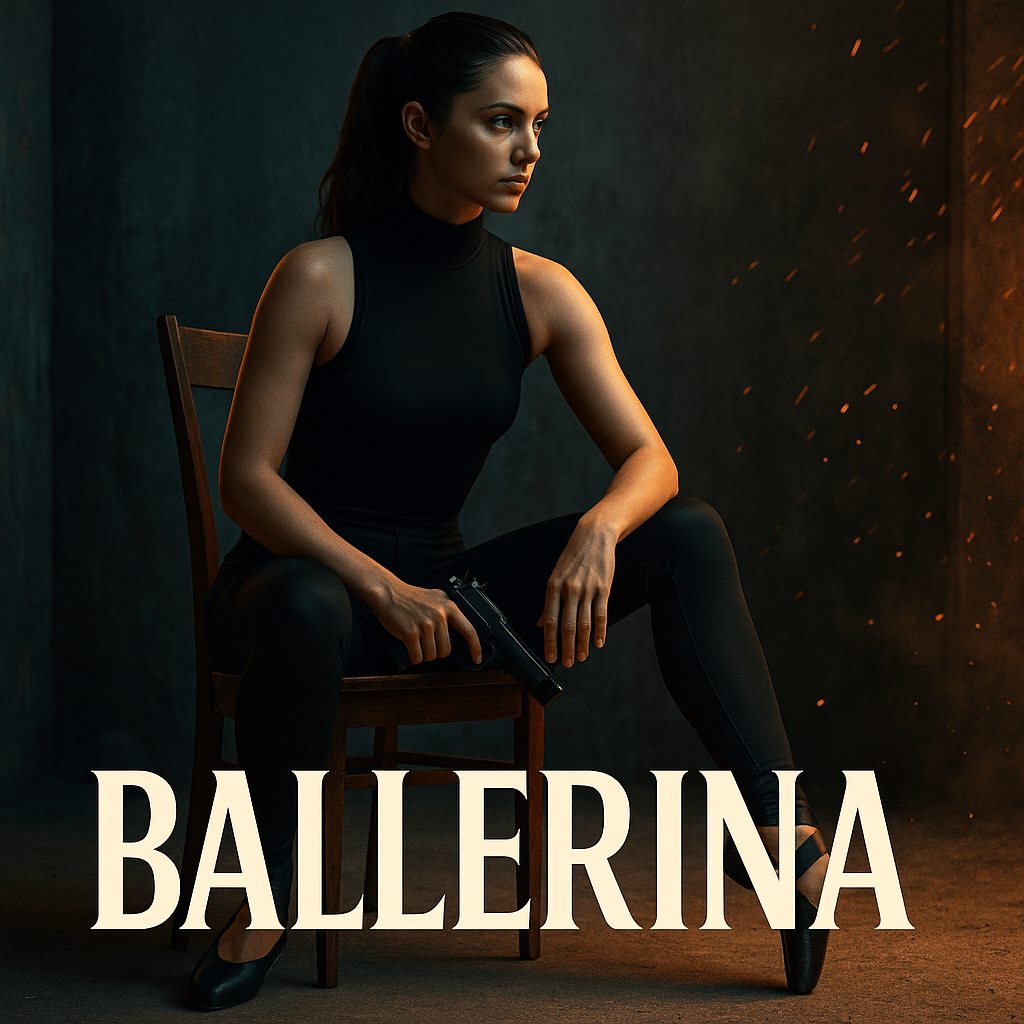
  • Ballerina

    Ballerina

    Grace. Vengeance. And More Neck Snaps Than Opening Night at the Met.

    This movie is part of the John Wick universe, which means everyone is either a highly trained assassin, a hotel manager, or dead. Possibly all three.

    Ballerina stars Ana de Armas as a professionally pirouetting vengeance machine who was raised in a secret ballet school that is somehow also a murder academy. Yes, it’s basically Center Stage if it had more landmines.

    The plot (which I have not seen but have aggressively imagined) follows our tutu-clad heroine as she sets out to avenge the mysterious death of her family, friends, dog, or possibly her Wi-Fi signal. She uses her lethal choreography and graceful homicide skills to take down an endless parade of bearded men in tactical gear who apparently never learned how to dodge a flying heel kick.

    There’s a moment in every fight where she pauses, just long enough to strike a ballet pose and reload. And that’s when you know somebody’s about to get Swan Lake’d right in the spleen.

    She navigates a trail of fight scenes lit only by chandeliers and unresolved trauma, faces a villain who wears gloves indoors and drinks tea way too menacingly, and relives childhood recitals set to emotional EDM. At least one important conversation in Russian ends with a sword in someone’s foot.

    Also, Keanu Reeves might show up as John Wick just to nod and say something like “she’s better than me,” before disappearing into a fog machine.

    I give it 5 out of 5 blood-spattered toe shoes, with bonus points if there’s a scene where she spins so fast she knocks out a room full of henchmen and gets a standing ovation.

  • The Life of Chuck

    The Life of Chuck

    A Three-Act Existential Breakdown Featuring Tap Dancing, Ghosts, and Mortgage Payments

    This is a movie based on a story by Stephen King, which means it probably includes at least one of the following:

    A haunted object A child who sees things Someone slowly losing their mind in a Denny’s

    But this one’s… different. It’s called The Life of Chuck, and from what I haven’t seen, it’s about a guy named Chuck who either dies at the beginning, middle, or end—or possibly all three—and the movie decides to tell his story backwards, because why not mess with the audience’s emotional chronology and their sense of linear time?

    The film is divided into three acts, which are like puzzle pieces from three different boxes:

    Chuck’s quiet death in a hospital Chuck’s strange middle-aged career detour into interpretive dance and spiritual crises Chuck’s childhood, where he discovers his attic contains both his future and a raccoon named Greg who knows too much

    There’s also an apocalyptic subplot, but it’s unclear whether it’s happening to the world or just Chuck’s cholesterol. At some point, a billboard with Chuck’s face appears in the sky, possibly to remind people to floss or question the meaning of consciousness.

    Expect:

    A monologue about regret delivered during an earthquake A scene where someone tap dances while a star collapses Chuck standing alone in a grocery store, whispering “this feels off” A metaphor so heavy it breaks a floorboard

    This movie stars Tom Hiddleston, Mark Hamill, and possibly your own emotional baggage. It’s described as “heartwarming” by people who cried during a soft pretzel commercial once.

    I give it 4 out of 5 metaphorical billboards, with bonus points if Chuck actually turns out to be a cosmic database administrator with a passion for jazz and slow disintegration.

  • The Phoenician Scheme

    The Phoenician Scheme

    Espionage, Eccentricity, and a Monologue Delivered Entirely Through Eyebrow Raises

    The Phoenician Scheme is the latest Wes Anderson film, which means it’s already been declared both “a masterpiece of visual symmetry” and “a crime against traditional narrative structure” depending on which corner of the internet you frequent.

    I haven’t seen it. But I have seen the trailer, read three think pieces, and accidentally wandered into a Reddit thread titled “Was the lemon truly a metaphor?” So I’m basically an expert.

    The plot, if you can call it that, follows an international cabal of emotionally detached spies as they unravel a Cold War-era mystery involving forged art, coded telegrams, and possibly a secret weapon disguised as a tea set. Jason Schwartzman plays a disillusioned cipher analyst who hasn’t blinked since 1997. Tilda Swinton plays a former double agent turned winemaker. Willem Dafoe may or may not be playing a sentient weather balloon.

    There are trench coats. There are typewriters. There’s a recurring motif involving bees, time zones, and the haunting sound of a metronome. Half the dialogue is whispered in French and the other half is delivered while someone makes hard eye contact across a 12-foot mahogany desk.

    Critics say it’s a “lovingly arranged meditation on espionage and existential drift,” which is film critic for “I don’t know what just happened but I feel smarter now.” Audiences say it’s “visually stunning,” which is what people say when they don’t want to admit they didn’t understand the part with the upside-down violin solo.

    Somewhere around the 40-minute mark, there’s allegedly a scene where four spies silently communicate their mutual distrust through the choreography of folding pocket squares. This is followed by a slow zoom on a filing cabinet and a surprise cameo from Jeff Goldblum’s disembodied voice reading surveillance transcripts like bedtime poetry.

    The Phoenician Scheme is about betrayal, bureaucracy, and beige. It’s less a film and more a highly curated panic attack set to a harpsichord soundtrack.

    I give it 4 out of 5 cross-stitched dossiers, and I assume at least one character is a metaphor for colonial guilt wrapped in a lavender cravat.

  • Karate Kid: Legends

    Karate Kid: Legends

    Two Legends. One Kid. And More Wisdom Than a Panda Express Fortune Cookie

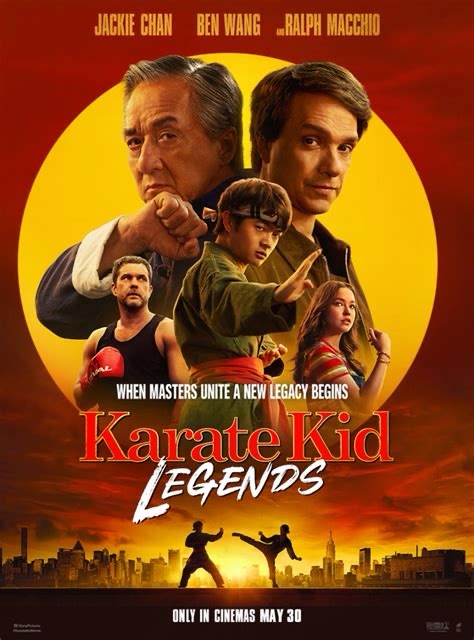
    So apparently this is the movie where Jackie Chan and Ralph Macchio team up—not to stop a global threat, but to co-manage the emotional stability of one incredibly stressed-out teenager. It’s a Karate Kid crossover event, and by “event,” I mean you’ll leave the theater unsure whether you need a black belt or a therapist.

    The story revolves around a young martial arts prodigy named Li Fong, who moves from Beijing to New York because the universe decided his life wasn’t hard enough already. He’s then jointly trained by two men from completely different cinematic timelines who bond over a mutual love of punching things and looking disappointed while holding tea.

    Jackie Chan, at 71 years old, is still flipping over balconies like gravity owes him money. His Mr. Han character brings wisdom, pain, and at least one scene where he teaches a lesson by mopping a floor so aggressively it causes a flashback. Meanwhile, Ralph Macchio’s Daniel LaRusso is still carrying the emotional weight of a high school tournament from 1984. He now mentors kids through karate and metaphorical breakdowns in parking lots.

    The plot builds toward a massive martial arts tournament, because that’s how this universe solves all its problems. International tension? Tournament. Grief and identity crises? Tournament. Forgot your locker combo? Spin kick until someone cries.

    Expect a lot of deep moral lessons delivered between flying kicks and dramatic stares. Jackie teaches “stillness in motion.” Ralph teaches “motion while overthinking everything.” Together, they’re like a divorced couple trying to co-parent a spiritual awakening.

    There’s also a rich villain dojo, because there’s always a rich villain dojo. They have matching uniforms, emotionally unavailable parents, and a team motto that probably involves the word “dominate” in calligraphy.

    I give it 4 out of 5 slowly whispered sayings that could double as yoga class instructions. Bonus points if Jackie and Ralph do a synchronized bow while the teen does a spinning backflip into inner peace.

  • Juliet & Romeo

    Juliet & Romeo

    Pop Ballads, Period Costumes, and the Most Emotionally Intense Key Change Since Les Mis

    Juliet & Romeo is what happens when Shakespeare meets Spotify. It’s a bold reimagining of the classic tragedy—except with pop music, elaborate choreography, and Rebel Wilson showing up just to make sure nobody forgets this is, in fact, a musical.

    This version flips the title and the ending. Yes, you read that right: they live. No tomb, no poison, no dagger, no tragic final gasp—just a sweeping duet and a vaguely empowering montage that seems to say, “Love wins. Death can suck it.”

    Juliet, played by Clara Rugaard, is all eyeliner, elegance, and emotional belting. Romeo, played by Jamie Ward, looks like a sentient candle commercial and sings every line like he’s one heartbreak away from joining a boy band. Together, they dance through Verona like it’s a Renaissance-themed TikTok set, exchanging Shakespearean side-eye in between verses of lyrics like “Why do they call it falling in love / When all it does is break you?”

    Critics are split. Some say it’s charming and bold. Others say it’s what happens when someone lets an AI rewrite West Side Story after binge-watching Glee. The songs are catchy in that “Was that real or did I dream it?” kind of way, and there’s a moment where Juliet delivers a soliloquy while standing on a balcony framed by a full gospel choir and a literal shooting star. Somewhere in the afterlife, Shakespeare is either weeping with joy or writing a sonnet titled Thou Hast Ruined Mine Plot Twist.

    The sets are lush, the costumes are stunning, and the emotional stakes are set to 11, even if the actual sword fighting looks like an aggressive dance-off at a Renaissance Fair. It’s loud. It’s sincere. It’s deeply allergic to subtlety.

    And while the original story was about the tragedy of fate and impulsive youth, this version is about self-empowerment, second chances, and holding a high note long enough to prove a point.

    I give Juliet & Romeo 4 out of 5 glitter-dusted declarations of love, with a bonus point for every critic who left the theater unsure whether they were moved, confused, or suddenly in love with the concept of mood lighting.

  • Friendship

    Friendship

    Suburban Dads, Emotional Damage, and the Most Passive-Aggressive Backyard Firepit in Cinema

    Friendship is a dark comedy that explores what happens when a group of adult men decide—against their better judgment—to hang out on purpose. It stars Paul Rudd, Tim Robinson, and a supporting cast of emotionally repressed dudes in flannel, cargo shorts, and the kind of sneakers you only buy after turning 40 and saying the word “arch support” unironically.

    The story follows Dan—because of course it’s Dan—who invites a few neighborhood dads over for beers, hoping to bond over grilling and casual trauma. What starts as a simple backyard hangout quickly devolves into passive-aggressive power dynamics, low-stakes betrayal, and a deep examination of why grown men think building a deck together counts as intimacy.

    From the opening scene, you know exactly what kind of emotional minefield you’re in for. There’s a garage jam session that ends in tears. A surprisingly intense game of cornhole that uncovers a decade-old grudge about fantasy football. One of the men cries in a tent while the others pretend not to notice. Another shows up late and tries to act like he wasn’t just circling the block for 45 minutes trying to talk himself into showing up.

    The movie somehow balances absurdity and poignancy, making you laugh out loud one minute and question your own friendships the next. Paul Rudd plays the guy who never opens up until he suddenly does in a monologue about mowing the lawn at night to avoid his feelings. Tim Robinson delivers an unhinged speech about the existential dread of patio furniture. And someone, at some point, definitely tries to hug someone else and gets politely rebuffed with a fist bump.

    It’s awkward, heartfelt, funny, and just uncomfortably real enough to make you want to text your old friends “sup” at 1 a.m. without context.

    I give Friendship 4.5 out of 5 backyard breakdowns, with extra credit for every character who emotionally unravels while holding a Solo cup.

  • The Last Rodeo

    The Last Rodeo

    Dust, Drama, and One Emotionally Available Horse

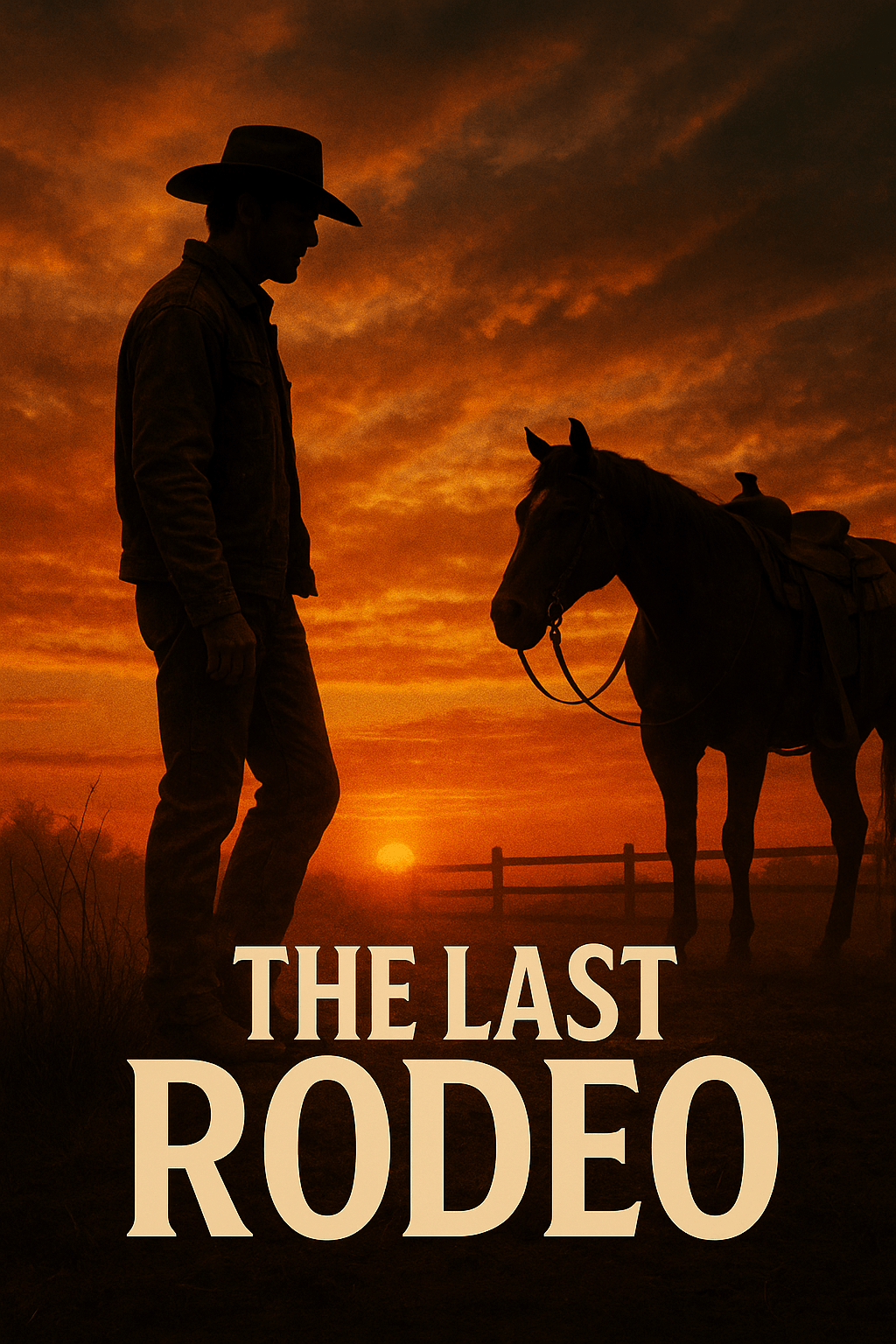
    The Last Rodeo is the kind of movie where you can smell the plot just by looking at the poster: one man, one saddle, and one final emotionally cathartic ride into the setting sun. It stars an aging cowboy (probably played by someone like Josh Brolin or any actor whose face looks like it was carved out of barn wood) who’s been out of the game since The Incident™ and now gets dragged back in for—you guessed it—one last rodeo.

    There’s a younger rider with potential but no discipline, a daughter he doesn’t talk to because of reasons, and a horse named something profound like “Redemption” or “Carol.” The trailer includes slow-motion dirt kicks, at least three scenes where someone dramatically tosses a cowboy hat onto a fence post, and a lot of gravel-voiced whisper-yelling like, “This ain’t just about bulls, son. It’s about who you are on the inside.”

    At some point, the protagonist will stare at an empty arena and flash back to a better time. This is followed by either a training montage set to acoustic guitar or a very quiet scene where he stares out over a prairie while being backlit by emotional trauma.

    There’s definitely a rival. His name is probably Cade. He drives a lifted truck, chews toothpicks aggressively, and wears designer denim. He once stole the protagonist’s title, his horse, and maybe his wife. It’s never made fully clear.

    The Last Rodeo is not just about bull riding. It’s about regret. It’s about second chances. It’s about saying “I’m sorry” without actually saying it, usually by building a barn with your estranged son. It’s about sweat-stained cowboy hats and a climactic ride that ends with either victory, a trip to the hospital, or both.

    In short, it’s The Wrestler but with more livestock.

    I give it 4 out of 5 metaphorical sunsets, with a bonus point for every time a character says “this ain’t no rodeo” while actively being at a rodeo.

  • Lilo & Stitch

    Lilo & Stitch

    Lilo & Stitch (2025): Ohana Means Budget Cuts

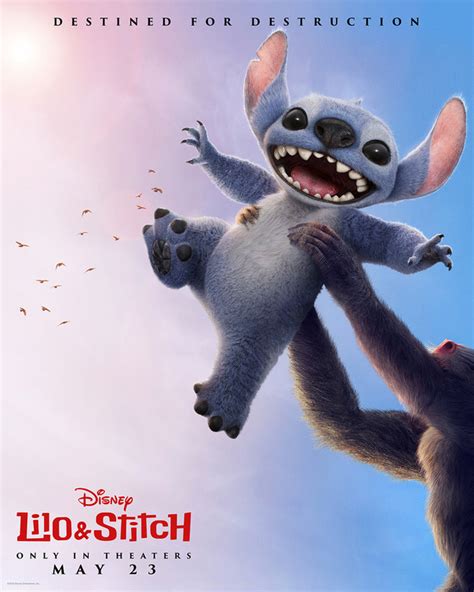
    Disney’s latest live-action remake, Lilo & Stitch, boldly reimagines the beloved 2002 animated classic by asking the question: “What if we took everything quirky and heartfelt about the original and filtered it through a committee of executives armed with CGI and nostalgia?”

    In this version, Lilo is still a lonely Hawaiian girl, and Stitch is still a genetically engineered alien fugitive. But now, their heartwarming tale unfolds amidst hyper-realistic backdrops and characters that straddle the uncanny valley. The film attempts to capture the original’s charm while introducing deeper emotional layers, particularly in the relationship between sisters Lilo and Nani .

    One notable change is the portrayal of the alien characters Jumba and Pleakley. Instead of their original alien forms with humorous disguises, the characters don more realistic “human skin suits” for part of the film to better suit the live-action medium and manage production budgets . This creative decision has sparked discussions among fans, especially regarding Pleakley’s character, who was cherished for his quirky humor and progressive representation in the original film .

    Despite these changes, the film has generated significant buzz. The trailer amassed over 100 million views, and the Super Bowl spot featuring Stitch “crashing” the field received 173.1 million online views in 24 hours, making it Disney’s most viewed spot digitally .

    I haven’t seen it, but based on the trailers and the online discourse, it seems like Disney has once again managed to stir both excitement and controversy with its latest remake.

    Rating: 3 out of 5 intergalactic adoption papers

  • F1

    F1

    Fast Cars, Loud Feelings, and Helmeted Men Staring into the Middle Distance

    F1 is a high-octane drama that explores what happens when you strap emotionally fragile millionaires into carbon fiber rockets and tell them to express themselves by going 200 mph in circles.

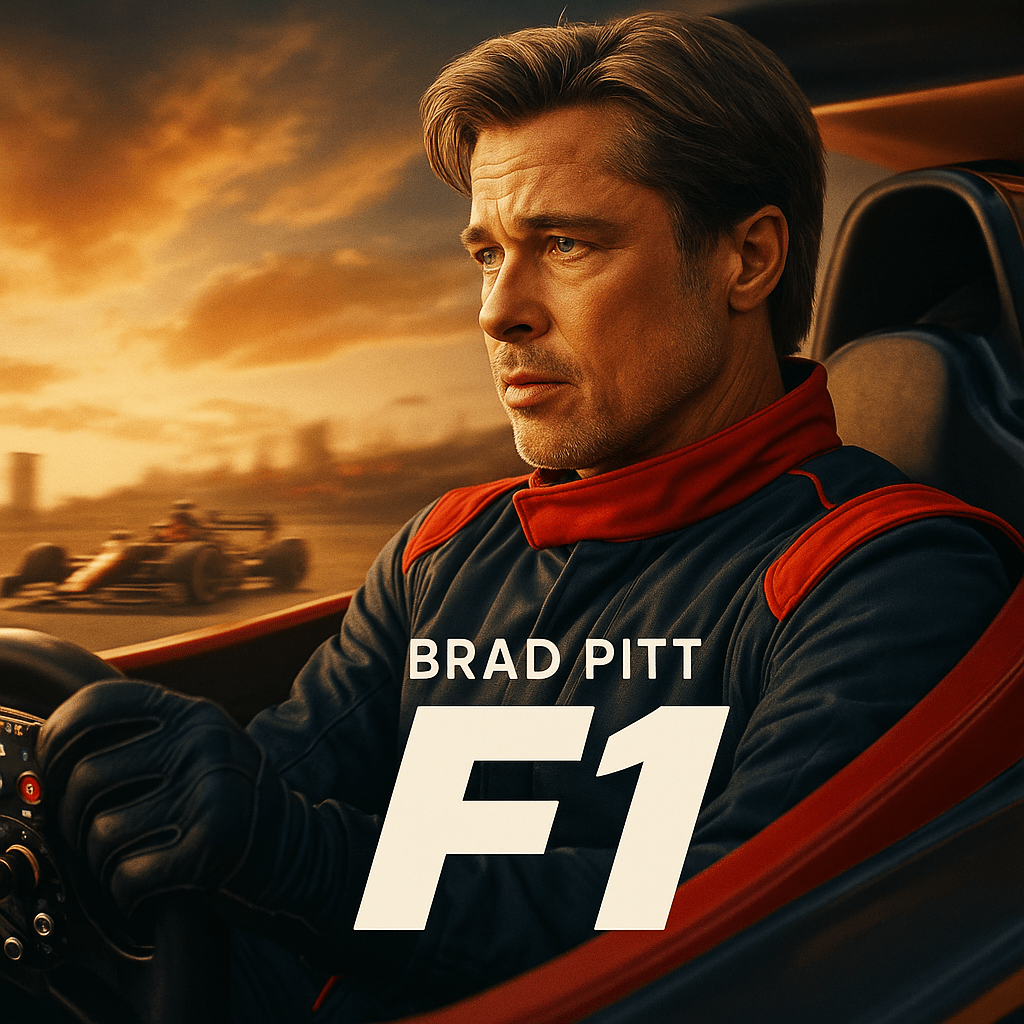
    It stars Brad Pitt as a retired Formula 1 legend dragged back onto the track for One Last Race™—a plot device so familiar it has its own pit crew. He’s mentoring a younger driver whose jawline is so sharp it voids insurance policies, and together they navigate fierce rivals, unresolved trauma, and multiple slow-motion walkaways from smoking vehicles.

    The trailer is a symphony of fast cuts, sweaty pit crews shouting into radios, and Brad Pitt staring at his helmet like it just insulted his mother. There’s a moment where someone yells, “He’s not ready!” followed by rain, dramatic piano chords, and a team principal throwing a clipboard in despair. There’s also a very emotional scene where someone walks away from a crashed car while orchestral strings scream, “Character development!”

    It’s not just about racing—it’s about redemption, trust, and how many close-up shots of brake pedals you can squeeze into a feature film. You can absolutely expect a training montage involving wind tunnels, steely glances across the garage, and someone learning a valuable life lesson by spinning out on Turn 3.

    And of course, the final race comes down to the wire. Not because that’s what happens in Formula 1, but because no studio executive is going to greenlight a movie where Brad Pitt loses to some guy named Max from Team Beige.

    In conclusion, F1 is a sleek, turbo-charged meditation on legacy, loyalty, and why you should never wear white pants around motor oil. It’s loud. It’s intense. And if someone doesn’t cry inside a helmet, was it even cinema?

    I give it 4 out of 5 emotionally conflicted pit stops, plus one bonus point for every time Brad Pitt dramatically removes his gloves like he’s peeling away his past.